How to Keep RV Water from Freezing in Winter
The first frost of winter often brings more than just icy mornings for RV travelers — it brings the hidden threat of frozen water lines. One cold night is all it takes for water trapped inside pipes or tanks to turn to ice, expanding with enough force to crack fittings, split hoses, and burst plumbing lines.
A single frozen pipe can leak up to 250 gallons of water per day once it thaws, according to the American Red Cross (redcross.org). In an RV, even a small leak can flood the floor or short out electrical components, leaving expensive damage that’s hard to repair on the road.
The problem worsens because RVs are designed for mobility, not arctic survival. Thin walls, under-belly plumbing, and exposed water hoses allow freezing air to reach critical systems faster than most owners realize. Studies from Go RVing show that over 60% of full-time RVers face water-system freezing at least once during winter camping (gorving.com).
Imagine arriving at a beautiful snow-covered campsite only to discover no running water for cooking or heating. It’s a frustrating and potentially costly experience, but one that’s entirely preventable.
With a combination of insulation, heat tape, skirting, and temperature-control techniques, you can safeguard every part of your RV’s water system. This complete guide reveals how to keep RV water from freezing in winter — so you can camp confidently, stay comfortable, and protect your investment no matter how cold it gets outside.
What Happens When RV Water Freezes (and Why It’s Risky)
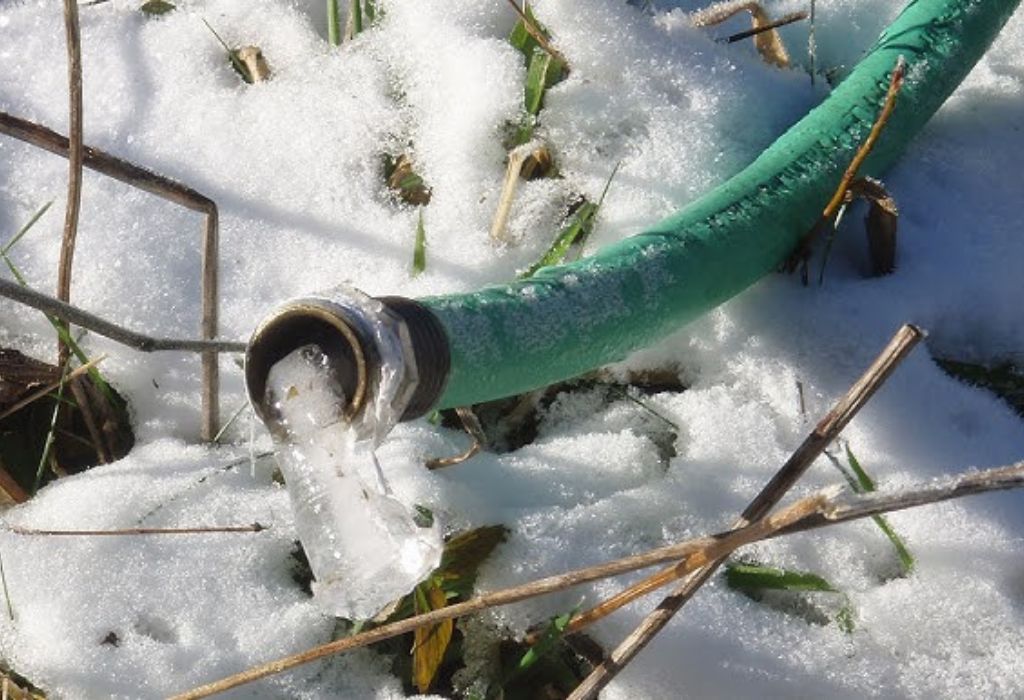
When the temperature drops below freezing, the water inside your RV’s plumbing begins to solidify, expanding by nearly 9% in volume as it turns to ice. This expansion builds intense pressure in hoses, fittings, and tanks that were never designed to handle it.
Once the pressure exceeds the pipe’s capacity, cracks appear — often in hidden spots behind panels or under the RV. According to State Farm Insurance, frozen pipes are among the leading causes of winter water-damage claims, costing around $10,000 per incident (statefarm.com).
The real danger is that most RV owners don’t notice the damage until thawing occurs. Water starts leaking silently under flooring or behind walls, soaking insulation and shorting out electrical components. What begins as a simple freeze can quickly turn into a full plumbing failure or mold issue that ruins the interior.
At what temperature can RV water systems start freezing?
Most lines freeze when outside temperatures fall to about 20°F (-7°C) for several hours.
Why are RV systems more prone to freezing than home plumbing?
Many RV pipes run through exterior or under-belly spaces that receive little to no heat.
What parts of the water system are most at risk?
Fresh-water hoses, holding tanks, exterior valves, and pump fittings freeze first.
Can a minor freeze damage the entire system?
Yes — even small ice pockets expand and cause cracks that worsen each freeze-thaw cycle.
Is it safe to use water during a freeze?
No — pressure from running water can rupture partially frozen pipes.
Key Components of the RV Water System to Protect
Preventing freeze damage starts by knowing which parts are vulnerable. The water system includes several areas exposed to cold air and wind that must be insulated or heated.
Fresh-Water Supply Lines and Hook-Up Hose
The external water hose and supply line are often the first to freeze since they sit outside the heated cabin. Using a heated hose or disconnecting it overnight can make all the difference.
Can the fresh-water hose stay connected in freezing weather?
Only if it’s a heated hose or fully insulated and drained after use.
Does wrapping the hose help?
Yes — foam pipe sleeves and heat tape prevent rapid temperature drops.
Should the pump run continuously?
No — constant pumping wastes energy; insulation and heating are better defenses.
How to spot early freeze signs?
Weak water flow, frost on fittings, or gurgling noises in pipes.
Holding Tanks (Grey and Black)
Grey and black tanks are located underneath the RV where air circulation is coldest. If they freeze, waste and greywater can solidify, blocking valves and causing cracks.
Why are holding tanks so vulnerable?
They sit in unheated under-belly areas directly exposed to cold air.
What happens when they freeze?
Ice expands, damaging tank walls and clogging drain valves.
Can RV-safe antifreeze be added?
Yes — non-toxic RV antifreeze helps, but heating pads are more reliable for live winter use.
Should tanks be emptied before cold fronts?
Yes — partially full tanks freeze faster than empty ones.
Under-Belly and Exterior Pipe Runs
Many water lines run along the under-carriage or behind panels outside heated zones. Without insulation, these freeze quickly in sub-zero conditions.
What is RV skirting?
Skirting surrounds the RV’s base to block wind and trap warmer air underneath.
Does foam insulation help?
Yes — wrapping pipes and compartments with foam boards raises temperature protection.
Should interior cabinet doors stay open?
Yes — warm air from the heater circulates into those spaces and protects pipes.
Can the furnace alone keep pipes safe?
Not always — external lines still need insulation or heat tape.
Proven Methods to Keep RV Water from Freezing
Applying several freeze-prevention strategies together offers the best protection.
Pipe and Hose Insulation
Insulating exposed lines slows heat loss dramatically. Use closed-cell foam sleeves or reflective foil insulation.
Which insulation materials work best?
Closed-cell foam sleeves, fiberglass wrap, or reflective foil insulation.
Is insulation enough below 0°F?
Combine it with heat tape for extreme cold.
Can insulation be a DIY job?
Yes — most wraps cut easily and fit over standard RV tubing.
Should the city-water hose be insulated too?
Yes — it’s fully exposed outdoors and freezes first.
Heat Tape and Tank Heating Pads
Active heating systems like electric heat tape or 12V tank pads keep water flowing even during deep freezes.
What is heat tape?
An electrical cable that warms pipes automatically when temperatures drop.
Can heating pads be installed on holding tanks?
Yes — adhesive pads stick directly to the tank surface and maintain warmth.
How much power do these devices use?
Minimal, but check your amp load if running multiple heaters on one circuit.
Are there safety concerns?
Follow manufacturer instructions; never overlap heat tape on itself.
RV Skirting and Campsite Positioning
Skirting blocks cold air and traps ground warmth under the RV, while choosing sunny, wind-protected spots adds natural heat.
What does skirting cost?
DIY foam panels cost around $200; professional vinyl skirts can exceed $1,000.
Is skirting only for stationary campers?
Yes — it’s best for long-term stays.
Does sunlight placement really help?
Yes — solar warmth can raise under-belly temps by 10–20°F.
Should skirting replace insulation?
No — both work best together.
Interior Heat Management
Keeping interior spaces warm prevents freezing in interior plumbing zones.
What’s the minimum safe temperature inside?
Maintain 60–65°F (15–18°C) to keep plumbing warm.
Why open cabinet doors under sinks?
It lets heat circulate around hidden pipes.
Should a trickle of water be left running?
Yes — moving water freezes slower, but it’s less efficient than insulation.
What if the RV is in storage?
Drain the system completely or winterize with RV antifreeze.
Winterization vs Live-Use Freeze Protection
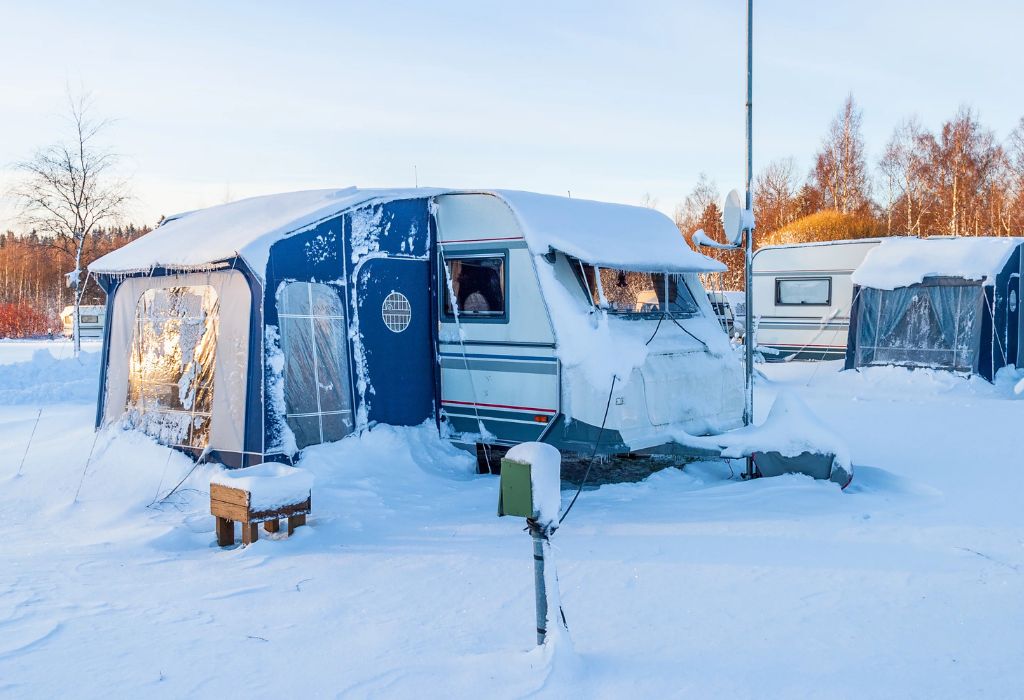
If you’ll store your RV during freezing months, winterization may be smarter than active heating. For full-time winter camping, insulation and heating are better choices.
What is winterization?
Draining tanks, bypassing the water heater, and filling lines with non-toxic antifreeze.
When should it be done?
Before temperatures consistently drop below freezing.
Can you switch back to normal use easily?
Yes — flush all antifreeze out before refilling the water system.
Which is cheaper overall?
Winterization costs under $50; live freeze-protection setup can reach several hundred but saves on repair bills.
Maintenance Checklist and Troubleshooting
Routine checks reduce surprises when the temperature drops. A simple list keeps every system protected.
What’s a pre-winter checklist?
Inspect seals, test heat tape, insulate hoses, open cabinets, check skirting, drain exterior hoses, and verify furnace function.
What are early freeze indicators?
Sluggish water flow, frost on fittings, or gurgling noises in lines.
How to safely thaw a frozen pipe?
Turn off water supply, apply gentle heat using a hair dryer or heat gun, and inspect for cracks afterward.
How often should inspections occur?
Daily during freezing periods, especially if parked long-term.
Conclusion
Protecting your RV water system from freezing isn’t complicated, but it does require preparation and consistency. Cold weather quickly exposes weak spots in insulation, hoses, or fittings, so prevention is always cheaper than repair.
By combining insulation, heat tape, skirting, and smart heating habits, your RV can stay fully functional even in severe winter conditions. Whether camping in the mountains or storing your RV for the season, following these strategies ensures fresh running water all winter long.
Start preparing before the first frost — check your insulation, wrap your hoses, and install heating where needed. Doing it now can save thousands in future repair costs and let you enjoy winter adventures without worry.

I’m David R. Coleman, the founder, lead writer, and lifelong tool enthusiast behind GarageToolPro.com. With years of experience in automotive repair, woodworking, and home DIY projects, I created this platform to share practical tips, detailed tool reviews, and step-by-step guides that help mechanics, hobbyists, and homeowners get the job done right the first time.